TLDR; The article says AI content creation can help search teams move faster, but solid QA still matters. Skip that step and problems add up fast: factual errors, generic writing, weak match with search intent, an inconsistent brand voice, and SEO losses.
It recommends a simple review system built around seven checks: intent, fact verification, originality, E-E-A-T, on-page SEO, brand voice, and risk. That makes the process clear and pretty easy to follow.
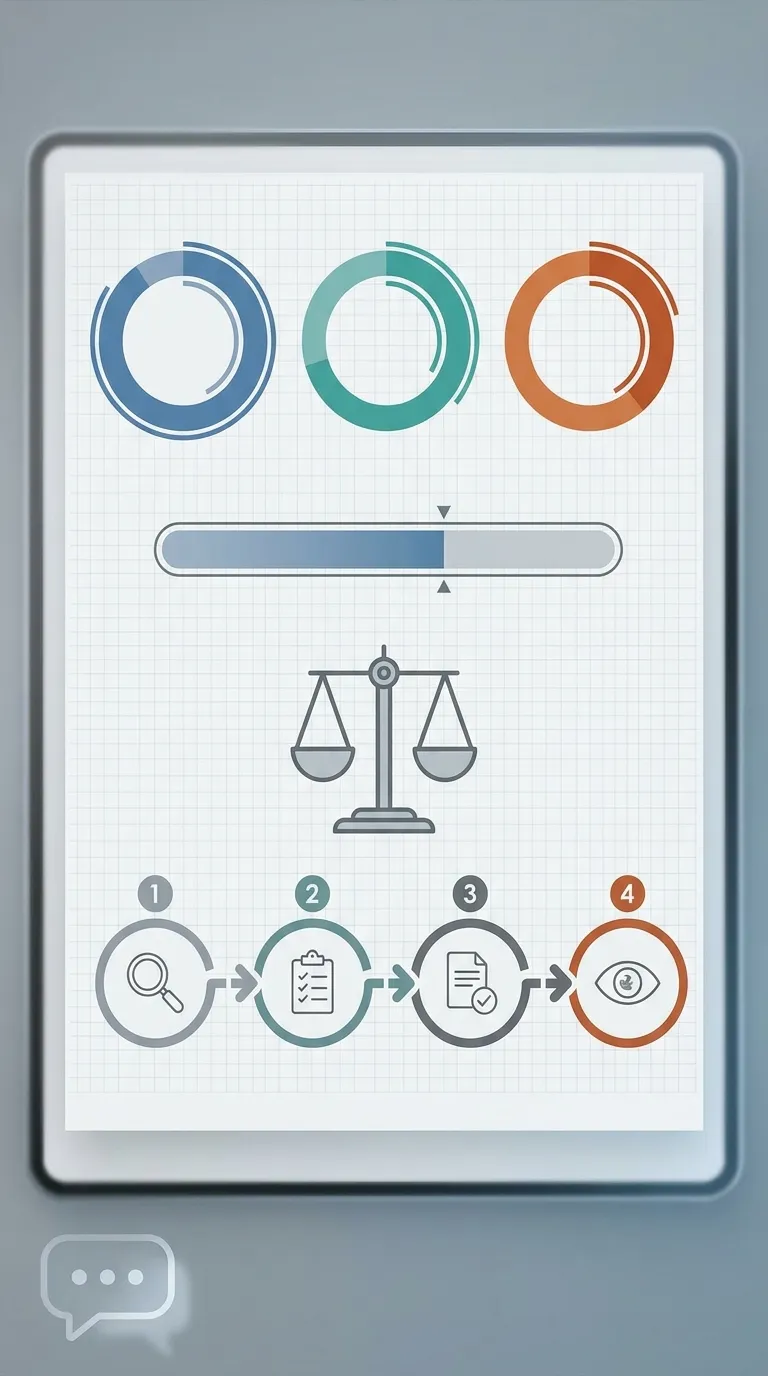
The workflow starts with a strong brief, then uses AI to create structured drafts. From there, editorial and SEO review happen before publishing and measuring results. That extra review catches issues before the content goes live.
AI content generation works best with human oversight, clear scorecards, and ongoing performance tracking. Over time, that helps teams build trust, improve rankings, and increase visibility in AI-driven search.
Search teams are moving fast, and AI content creation is helping them publish more pages, try more ideas, and target more keywords. But that extra speed creates a real problem. When review gets skipped, AI content generation can quickly lead to thin copy, wrong facts, an uneven brand voice, and weaker performance in search results pages, which honestly happens more often than many teams admit.
That is why quality assurance matters so much right now. AI should help teams move faster without lowering standards. A strong QA process gives digital marketers, SEO pros, content creators, and agencies a way to keep the benefits of automation while reducing risk. That is usually the balance most teams are actually trying to reach. It also helps agencies manage scale without sending low-trust content to clients, and that can damage confidence fast.
The good news is that AI writing assistant workflows do not need to be complicated. What usually helps most is setting clear checkpoints. In this guide, readers will learn what search teams should review, how to build a simple QA system, which mistakes can hurt rankings in search results, and how to get content ready for a search environment shaped by AI Overviews and trust signals. For a broader look at the tool space, that is covered here: AI Writing Tools 2026: Revolutionizing Content Creation.
Why AI content creation needs QA to rank well
AI is already a normal part of content work, and that probably isn’t changing soon. HubSpot reports that 94% of marketers plan to use AI in their content creation processes in 2026 (HubSpot). Another roundup of industry research says 83% of content marketing teams use AI tools and 85% of marketers edit AI-generated content before publishing (AdAI News). That last number really stands out. More established teams usually don’t publish raw drafts.
| Metric | Value | Why it matters |
|---|---|---|
| Marketers planning to use AI in content creation | 94% | AI is becoming a default workflow |
| Content teams using AI tools | 83% | Adoption is already widespread |
| Marketers editing AI content before publishing | 85% | Human QA is still standard practice |
| Faster production with AI plus editing | 50-60% | Speed gains come with review, not without it |
The table shows the story more clearly. AI content generation helps teams scale, but QA protects results in search rankings and on-page performance. BrightEdge cites Google guidance showing that quality is still the deciding factor, not whether AI was used (BrightEdge). Here, it’s pretty straightforward.
using AI doesn’t give content any special gains. It’s just content. If it is useful, helpful, original, and satisfies aspects of E-E-A-T, it might do well in Search.
Google guidance as quoted by BrightEdge, BrightEdge Tweet
So the QA process should focus on usefulness, originality, and trust, since that’s often where the biggest improvements come from. Detection myths and vanity output counts are worth skipping, because they usually don’t help much.
The core QA checklist for AI content creation
A good QA system should be simple enough to use again and again, while still strong enough to catch risk, which is often what matters most. Search teams usually need seven checks. Pretty simple, really.
1. Check search intent
Start with the target query and compare it with the article. Does the draft really answer what you’re looking for? A page can be well written and still miss the point, and that happens more often than you’d expect.
2. Verify facts and sources
AI writing tools can sound confident and still get dates, stats, product features, and legal claims wrong (yeah, really). So every number and claim needs a real source. Seriously, you usually can’t skip that.
3. Remove generic language
AI often writes smooth but empty copy. Add examples, brand insight, and original observations (I think that usually helps). Also make the transitions clearer, so people don’t get lost.
4. Improve E-E-A-T signals
According to Overdrive Interactive, AI-assisted content often does well when it’s helpful, original, and made for users, not just ranking tricks (Overdrive Interactive). Author context also helps. In most cases, real examples, expert review, and trusted citations matter.
5. Fix on-page SEO
Review heading and title tag ideas. Also check internal links, schema options, and image alt text, since they often help. Freshness and updates probably matter too.
6. Match tone and brand voice
Bruce Clay says quality often gets better when teams use brand guidelines and human editorial review. It’s a simple idea, but helpful. That also helps content feel authentic and on-brand, which matters here.
7. Review risk
Watch for unsupported claims, compliance issues, and statements that could hurt trust. Just be careful, okay.
A practical workflow for AI content creation teams and agencies
Usually, the best QA process is the one a team will actually use, and that matters most. Keep it short at first, then add more only when needed. It stays simple and effective, which is often why this workflow works well for in-house teams and agencies.
Step 1: Build a strong brief for AI content creation
Give the AI clear inputs. Include the target keyword, search intent, audience, funnel stage, brand voice notes, product facts, must-link pages, and sources to cite, the main points, really. Keep it short and clear, since better inputs usually mean less cleanup later. For deeper input strategies, see Beginner’s Guide to AI Writing Generators for Content Creators.
Step 2: Generate a draft with structure
Use AI for outlines, headline ideas, FAQs, or first drafts, that’s usually the easy part. Ask for clear sections instead of huge walls of text, which will likely slow things down later. That usually makes editing faster. Much faster.
Step 3: Run editorial QA
An editor checks clarity, flow, claims, originality, and tone, which usually matters a lot. This is often where weak AI content starts to feel useful. It’s a pretty important step.
Step 4: Run SEO QA
An SEO checks the main things here: keyword fit, internal links, title options, SERP match, and entity coverage. This is also usually where GEO thinking starts to matter. Ask if the page is clear enough to be quoted or summed up, and if it can appear in AI-driven search results, which probably matters more now.
Step 5: Publish and measure results of AI content creation
Once it’s live, track rankings, clicks, engagement, assisted conversions, and bounce rate. That sounds simple, but it still matters, often more than it seems at first. Research summarized by AdAI News found 12% more organic traffic when AI-assisted content was edited and optimized by humans. But unedited AI content had 23% higher bounce rates, which is a pretty clear warning (AdAI News).
If your team wants help choosing platforms before building this workflow, you’ll find more in 2026 AI Content Generation Tools Review. Additionally, Latest Trends in AI Content Creation: What’s Shaping 2026? provides insights into emerging practices.
Common mistakes that quietly hurt AI content creation SEO performance
A lot of teams think the main risk is getting caught using AI. Usually, the bigger problem is publishing a lot of average content. Search engines notice weak pages, and users do too, often within a few seconds.
One mistake is trusting the first draft too much. AI content generation can sound polished while still lacking evidence, missing nuance, or giving a surface-level answer that seems solid until someone reads it closely. Keyword over-optimization causes trouble too. Some drafts repeat the same terms in a stiff, robotic way, which often makes them less enjoyable to read.
Skipping humanization is another common issue. Readers can usually tell when a piece has no lived detail, no real point of view, and no useful example. That is often where an otherwise decent draft starts to fall apart. Stratton Craig says it clearly:
AI-generated content should never be published without a human fact-check.
Stratton Craig editorial guidance, Stratton Craig Tweet
There is also the problem of duplicate framing. When competitors use similar AI writing assistant prompts, many articles start to sound alike. That makes it harder for any single piece to stand out or feel worth reading. Search teams should break that pattern with original examples, lessons from clients, test results, or a stronger point of view, since even a slightly sharper angle often helps.
For teams worried about robotic output, AI Writing Assistant Rise in Corporate Communications 2026 explores how human tone and review improve trust.
How QA connects to GEO and AI content creation future of search
Search is changing fast. AI Overviews, zero-click behavior, and answer engines are pushing teams to create content that is easier to trust, summarize, and cite. Squarespace points to AI Overviews and changing search behavior as major SEO trends, while Salesforce points to the need for stronger topic authority and clearer content in AI-shaped search experiences (Squarespace, Salesforce).
That is where QA starts to offer a real GEO advantage. A solid review process helps teams publish content with cleaner structure, clearer answers, richer entity context, and stronger evidence, which can make a real difference. Short and useful still matters here. It helps human readers understand the page faster, and AI systems can often read it more easily too.
Put simply, QA is no longer only about catching mistakes. It also helps make content easier to extract, trust, and reuse across modern search surfaces. That is a bigger job now, and probably a more practical one too.
A platform like SEO Bot Software fits this shift because search teams now need reviews, insights, workflows, and tools that connect AI content creation with technical SEO and a broader automation strategy.
Tools and scorecards that make AI content creation QA easier
You do not need a huge tech stack to review AI content well. In many cases, a shared scorecard is enough, and honestly, that is often the easiest option. A practical way to start is with a basic pass/fail review, using categories like search intent, fact accuracy, originality, voice, on-page SEO, internal links, and risk.
Clear thresholds matter, especially when deadlines get really tight. For example, an article should not be published if facts have not been checked, if the intro does not answer the main query in the first paragraph, or if there is no original value beyond the pages already ranking in search results. That usually helps teams stay honest under pressure.
Agencies can often go a bit further by assigning roles. Writers handle first-pass edits, editors focus on quality and voice, and SEOs handle final optimization. That way, AI writing assistant workflows keep moving without letting quality become a bottleneck, which can happen pretty easily.
The best teams also review outcomes every month. Which AI-assisted pages gained rankings, and where did engagement drop? Over time, the QA scorecard becomes more than an editing checklist. It becomes a performance tool for spotting what improves rankings and what hurts engagement. Simple, and really useful.
Frequently Asked Questions
What is AI content creation QA?
AI content creation QA is the review process used to check AI-assisted drafts before publishing. It covers fact-checking, search intent, originality, brand voice, on-page SEO, and risk. The goal is to keep speed while protecting quality.
Why do search teams need QA for AI content generation?
Search teams publish at scale, so small quality issues can spread fast. QA helps prevent false claims, weak intent matching, and thin content that can hurt rankings and engagement. It also improves trust for users and clients.
Can AI-generated content rank in Google?
Yes, AI-assisted content can rank if it is useful, original, and trustworthy. Google guidance summarized by industry sources shows that quality matters more than the method used to create the page. Human editing is often the difference between a draft and a strong ranking asset.
What should an AI writing assistant never do on its own?
It should not publish final copy without human review. AI can help with drafts, outlines, summaries, and optimization ideas, but people still need to verify facts, adjust tone, and assess brand and legal risk.
How can agencies scale AI content without losing quality?
Use a repeatable brief, a clear QA scorecard, and role-based review. Keep prompts consistent, require source checks, and measure content results after publishing. That creates a process that scales better than relying on instinct alone.
Put your AI content creation workflow to work
AI content creation isn’t the main issue. A weak process usually is. The teams doing well today aren’t the ones pumping out the most AI drafts. They’re the ones turning AI content generation into a reliable system with real editorial control, and that’s what matters most here.
If there’s one thing to remember, it’s this: AI should help teams create more, while QA protects performance. Review for search intent, but facts also need close checking. Originality should be added. E-E-A-T needs to be stronger. It also helps to tune the page for SEO and GEO, because both often matter. Then measure what happens after it goes live, usually in rankings, traffic, and engagement.
That creates a good balance for digital marketers, agencies, and content teams. They get the speed of an AI writing assistant while still protecting trust and rankings. In most cases, that means moving faster without letting quality drop.
Start small if that helps. One useful approach is to build a simple checklist and test it in a workflow. Then improve it based on performance, for example by tracking results after launch. In a search environment shaped by automation and AI-first results, careful QA is quickly becoming a real competitive edge.