TLDR; The article looks at four leading AI writing platforms, Seobotsoftware, Jasper, Copy.ai, and Writesonic, to help teams decide if they need simple text generation or a more complete AI writing assistant.
For SEO-focused teams, Seobotsoftware feels like the strongest pick because it combines content generation, SEO automation, technical insights, and workflow support, so it goes far beyond drafting. It offers a fuller setup overall. Jasper is the clear choice for brand control. Copy.ai leans more toward fast marketing production, while Writesonic gives teams lower-cost output that still works well for SEO.
The main point is simple: teams should choose based on workflow needs, editing effort, collaboration, and SEO support, not just hype or raw writing speed. For teams that want content operations that can grow and stay closely connected to search performance, assistant-style platforms make more sense than basic AI writing tools.
If you’re comparing AI writing tools and trying to figure out whether your team needs a basic generator or a full AI writing assistant, you’re not alone. Marketing teams, agencies and SEO pros are all running into the same problem: how to create more content without losing quality, speed or search performance. For deeper insights into the evolution of these platforms, you can also explore AI Writing Assistant Rise in Corporate Communications 2026 and AI Writing Tools 2026: Revolutionizing Content Creation.
A lot of platforms sound similar at first. They promise faster writing, smarter workflows and better results. Fair enough. But once you take a closer look, the differences matter. Some tools are made for quick copy, while others are a better fit for content operations, SEO support or team collaboration.
The leading options for marketers and content teams were compared based on what they actually offer, where they fit best and where they fall short. The decision matters right now. Teams are under pressure to publish more across blogs, landing pages, email and search-driven content, with fewer resources in many cases. Pick the wrong platform and you end up with more editing, more confusion and more wasted time. Pick the right one, and the whole workflow becomes simpler.
What You’ll Find in the Comparison
- Seobotsoftware
- Jasper
- Copy.ai
- Writesonic
Best AI Writing Tools for Teams
1. Seobotsoftware
At a Glance
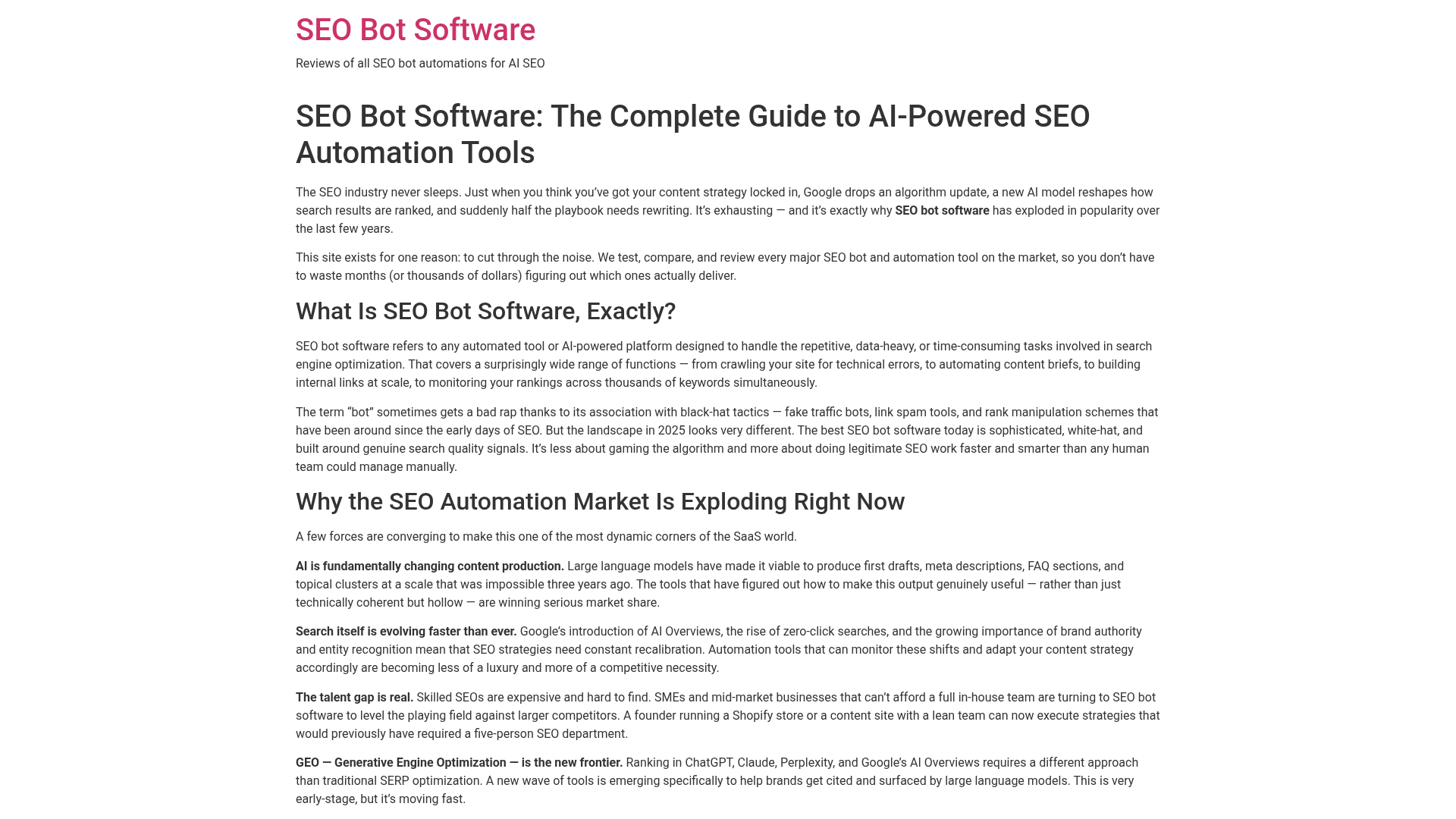
SEO Bot Software is the featured pick in this comparison because it lines up with what many digital teams need right now: more than basic text generation. Rather than working like a simple prompt box, it focuses on AI-powered SEO automation, technical SEO insights, content support, and newer search-focused approaches like Generative Engine Optimization. It gives teams a wider set of tools. For teams that care about rankings, smoother workflows, and content operations that can grow without getting messy, it feels like a better fit than tools that only focus on copy generation.
Core Features
Who It’s For
Seobotsoftware is a strong fit for digital marketers, SEO professionals, agencies, and content teams that want AI help tied to real search outcomes. In practice, it makes the most sense for people who need support with SEO automation, content scaling, and clearer workflows rather than just quick writing help. It feels more useful for teams with ongoing content needs.
Unique Value Proposition
Seobotsoftware stands out because it covers more of the complete SEO content process. Plenty of AI writing assistants help teams draft copy, but fewer pay attention to the bigger picture of technical SEO, automation, and changing search behavior. That makes the platform appealing for teams that want to connect content production with ranking goals instead of treating writing as a separate task. The real value goes beyond asking whether it can write a paragraph. A better question is whether it can help a content operation perform better. That’s where Seobotsoftware sets itself apart.
Real World Use Case
Picture a small agency managing several client blogs at once. Instead of jumping between separate writing, optimization, and SEO review tools, the team can use Seobotsoftware to support a more connected workflow that keeps work moving. There is less back and forth. The team spends less time juggling tools, makes content decisions faster, and gets a clearer path from idea to a publish-ready asset.
Pricing: Contact for pricing
Website: https://www.seobotsoftware.com/
2. Jasper
At a Glance
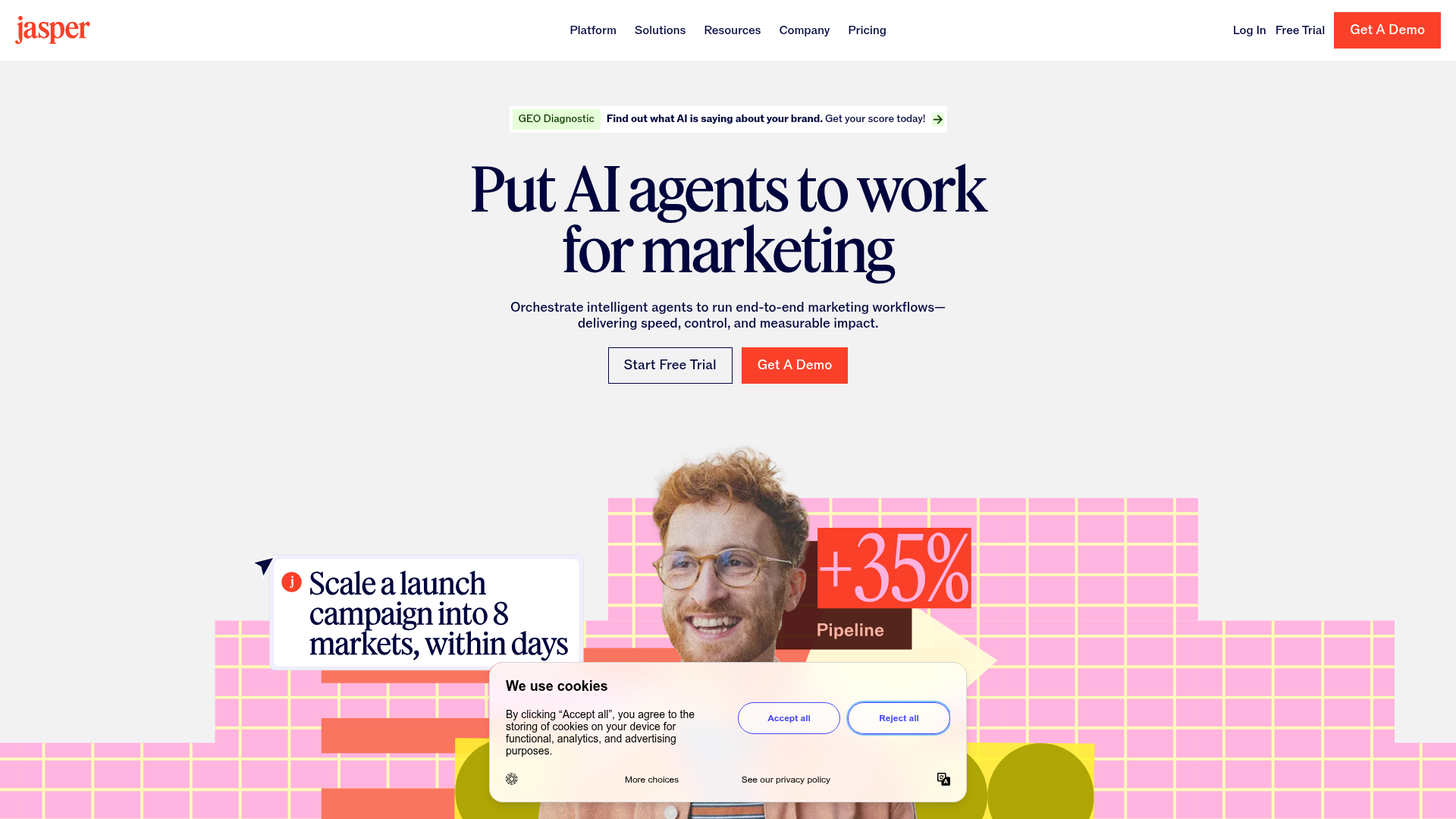
Jasper is one of the best-known AI writing assistant platforms for marketing teams. Founded in 2021, it grew fast by focusing on branded content for blogs, ads, landing pages, and email. That focus paid off. Its biggest strength is team structure, with brand voice controls, collaboration features, and workflow support that make Jasper feel like more than a basic generator. For larger content operations that want tighter message consistency, Jasper is a strong fit, though it leans more toward marketing than deep SEO automation.
Core Features
Who It’s For
Jasper works best for established marketing teams, brand-focused organizations, and companies that need strong control over tone and messaging. It works especially well when consistency matters more than deep SEO workflow support.
Unique Value Proposition
Jasper stands out by helping teams create AI-assisted content without losing brand structure. Teams dealing with message consistency problems across channels get more control here than they get with many lighter tools.
Pricing: Creator plans typically start around $49/month; Pro and business pricing available
Website: https://www.jasper.ai/
3. Copy.ai
At a Glance
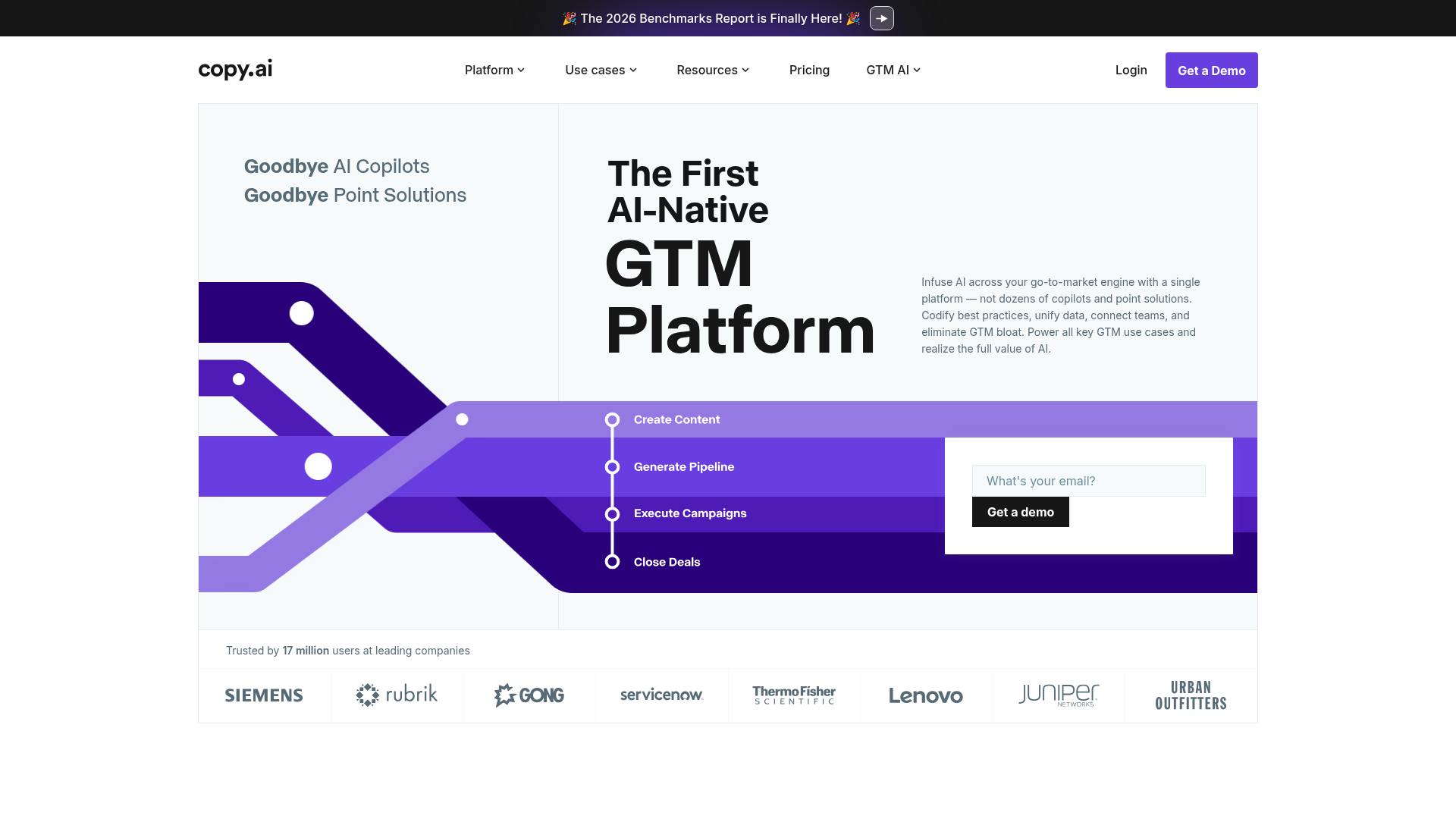
Copy.ai launched in 2020 and became a popular AI writing assistant for quick marketing content and go-to-market workflows. It’s known for being easy to use, full of templates, and helpful for sales and marketing teams handling different kinds of tasks. Very approachable. Many users like that it makes AI-generated copy feel simple to start using right away, without a steep learning curve or much setup. Still, the platform feels wider in scope than tools built mainly for SEO. For teams focused mostly on search content, it may offer more value as a productivity tool than a full SEO content engine.
Core Features
Who It’s For
Copy.ai works well for startups, marketing teams and sales-led organizations that want speed and simple automation. It works especially well for teams creating a high volume of short-form assets across different channels.
Unique Value Proposition
The biggest advantage here is accessibility. Copy.ai makes AI writing feel fast, practical and easy to use in everyday work. It stands out most for teams that care more about volume and convenience than deeper SEO guidance.
Pricing: Starter plans commonly begin around $49/month; enterprise pricing available
Website: https://www.copy.ai/
4. Writesonic
At a Glance
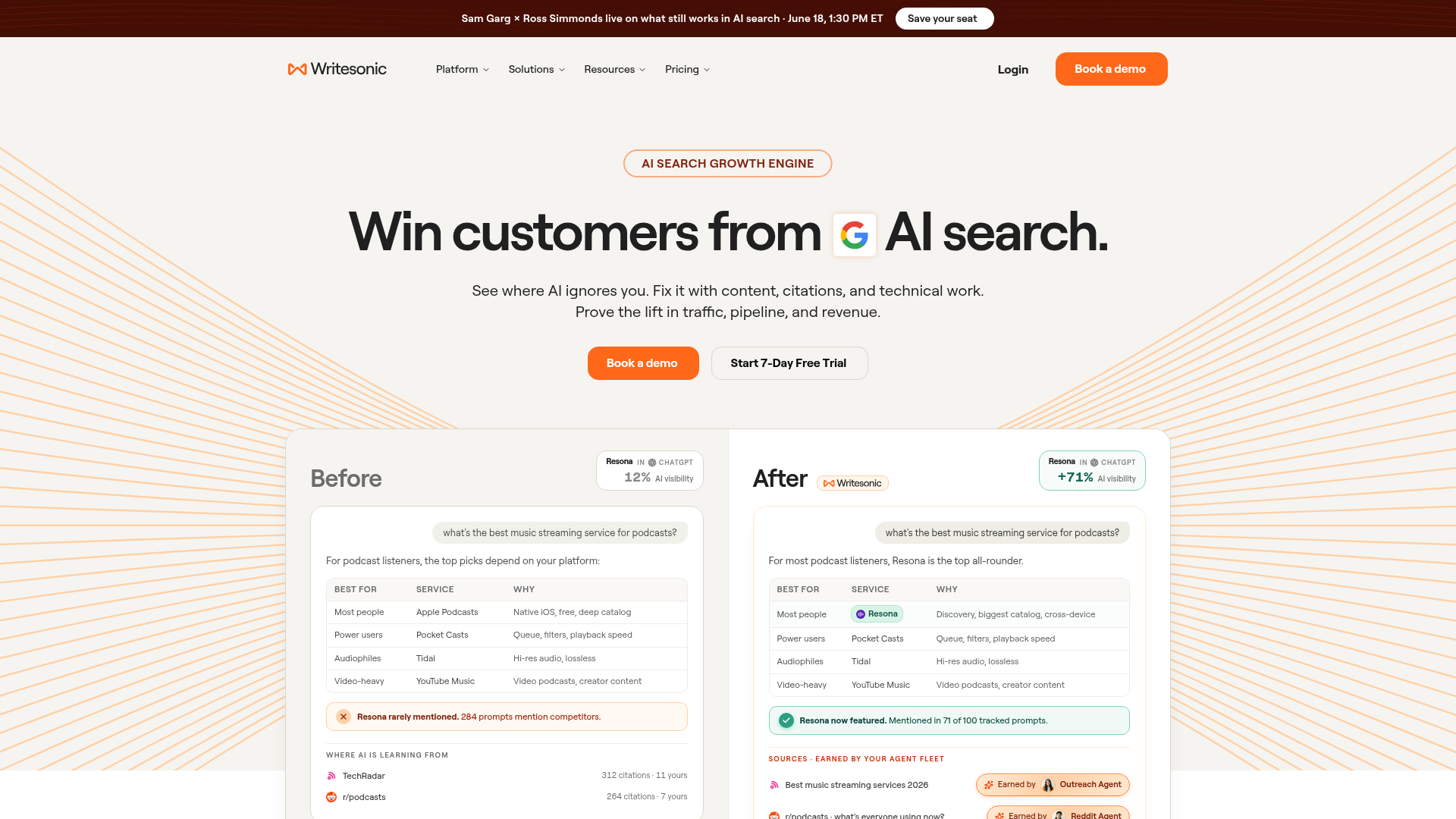
Founded in 2021, Writesonic is one of the more SEO-aware tools in this group. It offers AI article writing, blog tools, chatbot features, and support for marketing content, not just general copy. Compared with broader copy platforms, Writesonic attracts bloggers, agencies, and SEO teams because it focuses more directly on search content production. Entry pricing is easier to afford, though the output can vary and still needs careful review.
Core Features
Who It’s For
Writesonic is a good fit for bloggers, lean marketing teams, and agencies that need affordable AI writing tools with a stronger SEO angle. It works especially well for teams creating content at scale and looking for something useful rather than too broad.
Unique Value Proposition
Writesonic balances affordability and SEO relevance better than many broad AI copy tools. For teams that want to go beyond simple copywriting into search-focused production without a big upfront cost, it can be a solid middle-ground choice.
Pricing: Entry pricing starts around $16/month; higher tiers depend on usage
Website: https://writesonic.com
How These Tools Compare in Practice
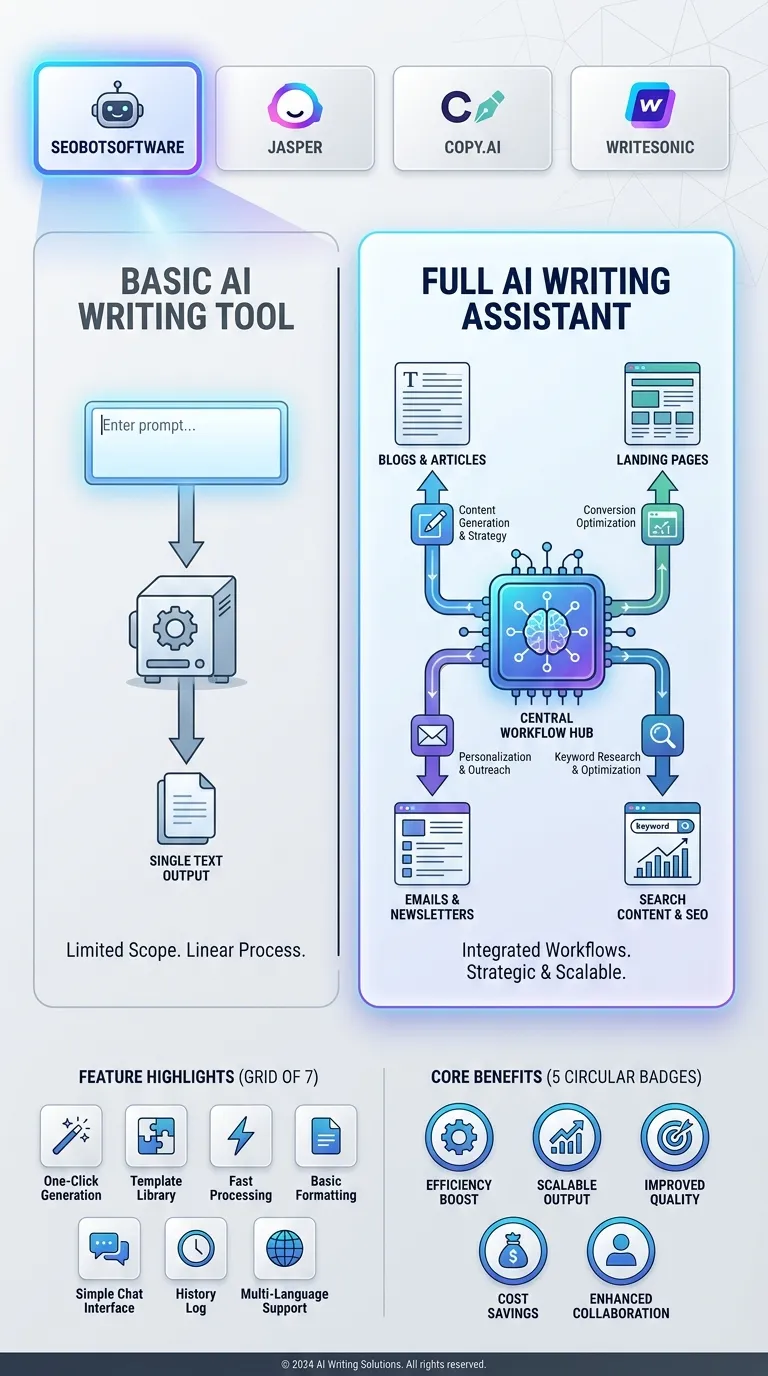
One clear way to see the difference between an AI writing tool and a real AI writing assistant is to look at what happens after the first draft. Some platforms mainly help people generate words. Others also help teams manage brand voice, SEO direction, workflows, and publishing efficiency. That difference matters, especially for agencies and in-house teams.
Comparison of Top Solutions
| Company |
Key Features |
Pros |
Cons |
Pricing |
| Seobotsoftware |
AI-powered SEO automation, technical SEO insights, AI content generation, GEO support, workflow-focused guidance |
SEO-first approach, broader strategic value, useful for teams, aligned with modern search needs |
None |
Contact for pricing |
| Jasper |
AI writing, brand voice, style guides, collaboration, campaign workflows |
Strong brand control, team workflows, established platform, versatile use cases |
Higher cost, less SEO-specialized, long-form editing needed |
Starts around $49/month |
| Copy.ai |
Marketing copy generation, workflow automation, templates, team collaboration |
Easy to use, template variety, fast output, workflow support |
Less SEO depth, article editing needed, broad GTM focus |
Starts around $49/month |
| Writesonic |
AI article writing, SEO tools, chatbot features, integrations, scalable content creation |
SEO-oriented, lower entry price, good for volume, broad feature mix |
Quality can vary, advanced plans cost more, manual review needed |
Starts around $16/month |
Side by side, Seobotsoftware stands out because it fits teams that care about content performance, not just content output. Jasper works well for branding. Copy.ai is a strong choice for fast marketing production, while Writesonic gives teams a more budget-friendly SEO option. For teams that want AI support tied to writing, SEO automation, and search strategy, Seobotsoftware is the clearest fit.
What Teams Should Prioritize Before Choosing
The best choice depends on what your team is trying to fix. If the main problem is slow campaign copy, a general AI writing assistant may be enough. If the challenge is building a repeatable search content system, your team needs more than text generation. It needs workflow support, SEO thinking, and a clearer connection between content and discoverability.
A smart buying checklist comes down to a few practical questions:
For many marketers, that’s where the difference between an AI writing tool and an AI writing assistant becomes clearer. A tool gives teams drafts. An assistant helps teams move faster, work more easily, and avoid bottlenecks.
Stop Chasing More Content and Start Building Better Workflow
Most teams don’t need one more tool pumping out extra words. They need a better system to plan, create, and improve content in ways that actually support SEO goals instead of just adding to the pile. A lot of platforms fall short here. Useful, but limited. They help with output, yet they don’t always help teams pick the right direction. For related workflow optimization insights, see AI Writing Assistant Trends 2026: Latest Innovations.
Seobotsoftware stands out because it supports the bigger picture. It helps teams manage AI-powered SEO automation, content generation, and stronger alignment with the way search is changing, especially when the old playbook keeps shifting. Agencies, marketing teams, and content operations can get tired of juggling disconnected tools or patching workflows together. That gets old fast. Seobotsoftware is worth a closer look.
The next step is simple: visit https://www.seobotsoftware.com/ and see whether its SEO-first approach fits the way your team works. If the goal is smarter content operations instead of just faster writing, Seobotsoftware is a solid place to start.
Frequently Asked Questions
What should teams look for in AI writing tools?
Start with workflow fit, not hype. Look at content quality, editing time, SEO support, collaboration features, brand controls, and pricing. The best platform is the one that saves your team time without creating more cleanup work later.
What is the difference between an AI writing tool and an AI writing assistant?
An AI writing tool usually focuses on generating copy from prompts. An AI writing assistant goes further by supporting workflows, collaboration, brand voice, and in some cases SEO strategy. For example, SEO Bot Software is more relevant for teams that want AI tied to SEO automation instead of simple draft generation alone.
How can I tell if an AI writing assistant is effective for SEO?
Check whether it helps with search intent, content structure, optimization workflows, and publish-ready quality. You should also measure whether the content reduces production time while still supporting rankings, traffic, and engagement. Platforms like SEO Bot Software are useful examples when your main goal is SEO-led content operations.
How much do AI writing tools usually cost?
Pricing varies a lot. Entry plans often start around $16 to $49 per month for self-serve tools, while team or enterprise plans can move into custom pricing. The real cost is not just the subscription, but also how much human editing and workflow management your team still has to do.
How long does it take to see results from an AI writing platform?
You can usually see workflow gains within days or weeks, especially in draft speed and idea generation. SEO results take longer and depend on your strategy, site authority, editing quality, and publishing consistency. In most cases, organic performance improvements take a few months to measure clearly.
Which types of businesses benefit most from AI writing assistants?
Agencies, SaaS companies, in-house marketing teams, publishers, and e-commerce brands often benefit the most. These businesses usually have ongoing content needs, multiple stakeholders, and pressure to publish consistently across channels.