TLDR; In 2026, the best SEO writing tools handle keyword discovery, search intent, briefs, live optimization, content refreshes, and answer-engine visibility. Pick tools that fit real workflows for in-house teams, agencies, and creators.
Workflow fit beats content scores. Don’t chase volume, skip human review, or expect AI to replace strategy, expertise, editing, technical SEO, internal linking, and performance tracking. Test tools in real use and favor GEO-friendly structure.
SEO teams in 2026 aren’t debating whether to use AI anymore. They’re working out which tools actually help them publish better content, faster, without turning the whole workflow into a mess. A few years ago, many platforms mainly generated text. Now, the useful ones also help with research, search intent, optimization, updates, and answer-engine visibility.
Content workflows keep getting tighter, and every step feels the pressure. Writers need briefs faster. Editors want cleaner drafts. SEO managers need pages that can rank in search and also show up in AI-generated answers.
Modern seo writing tools help with that. The best ones do more than assist with writing. They also help teams plan, shape, optimize, and refresh content with less manual work. In this guide, readers will learn which features matter most, how an AI SEO writing tool can fit into the workflow, which mistakes to avoid, and how to choose a setup that works for marketers, agencies, and content teams.
What Makes SEO Writing Tools Essential in 2026
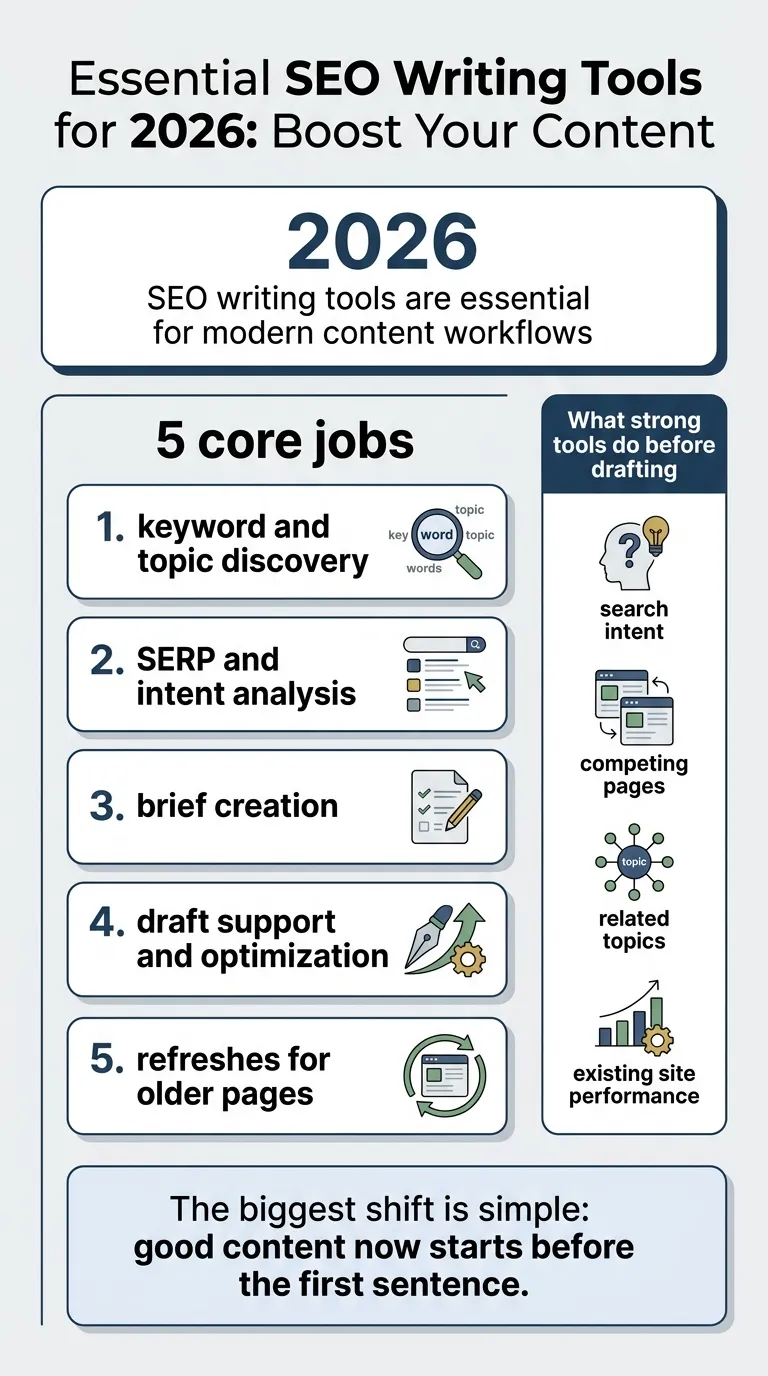
The biggest shift is simple: good content now starts before the first sentence. Strong tools look at search intent, competing pages, related topics, and existing site performance before anyone starts drafting. Less guessing. Fewer rewrites later.
A useful platform should help with five core jobs:
- keyword and topic discovery
- SERP and intent analysis
- brief creation
- draft support and optimization
- refreshes for older pages
Teams that publish at scale can lose time in the handoff between strategy and writing. An SEO manager builds the target keyword list, a writer creates the draft, an editor fixes the structure, and then someone checks internal links, headings, and content gaps. When one tool supports more of that work, the workflow runs more smoothly.
A lot of teams see this every day. The value isn’t just speed. Better direction at the start changes the draft before the writing even begins.
If you’re comparing categories first, this breakdown of AI writing tools vs assistants can help show where drafting ends and workflow support begins. Teams comparing broader platforms can also review AI marketing tools that actually help SEO teams for a wider look at automation support.
The Core Features to Look for in an AI SEO Writing Tool
Not every AI SEO writing tool deserves a place in the the stack. Some generate words well but miss the mark on content that really matches search goals. Others do okay with scoring but slow writers down.
The best tools tend to share a few useful traits.
Search intent mapping
A good tool should show whether the query needs a guide, a comparison, a product page, or just a quick answer. Get the intent wrong and the draft misses the point, even if the writing sounds fine.
SERP-aware content guidance
Good platforms check what already ranks. They look at topic coverage, common subheadings, entities, and even angles others miss, so writers can create competitive pages without copying. Smart, not copycat.
Optimization during drafting
The old way was simple: write first, optimize later. In 2026, that wastes time. Guided drafting works better, with live feedback on coverage, structure, and clarity.
Refresh support
Many teams get better results by fixing older pages instead of publishing new ones. A good tool should find weak content, outdated sections, and missing terms.
Workflow fit
Easy to miss, but it matters a lot. If the tool doesn’t fit well with your CMS, docs or review process, even a stacked feature list won’t save it.
One common buying mistake? Chasing output volume. More words don’t always mean better value.
How Different Teams Use SEO Writing Tools
The right setup depends on who’s using it. Freelancers, in-house teams and agencies need different things.
In-house marketers want speed and control. They need faster briefs, consistent messaging and a clear way to update priority pages without losing oversight. Agencies deal with scale. They may manage many clients, and each one can bring different goals, workflows and voice rules. Content creators care most about getting a clean draft and stronger structure without sounding robotic.
The best seo writing tools support role-based work. A strategist can set the target query and content angle. Then a writer drafts within clear guardrails. An editor improves readability and adds real expertise. A manager tracks updates and sees why the team made them.
Teams also need to think beyond the article itself. Search behavior is shifting toward fast answers, short summaries and AI-generated result layers. A writing tool should help teams create content that’s easy to scan, well-structured and clear enough for answer engines to reuse.
For broader workflow planning, Best SEO Copywriting Tools for Faster Content Ops is a useful companion read, especially if production speed is the bottleneck. Agencies managing larger operations may also benefit from reviewing SEO tools for agencies that need fewer logins when evaluating workflow efficiency.
A common mistake is using AI drafts without a review process. That can lead to flat intros, repeated phrases, weak examples and claims that still need fact-checking. Human review still matters. It turns acceptable content into something people can actually use.
Common Tool Selection Mistakes That Hurt Results
A lot of teams buy software after watching demos instead of checking how it works day to day. Problems show up quickly. A polished dashboard can hide weak output, shaky integrations, or scoring systems that push writers toward awkward copy.
Here are the most common mistakes:
Picking a tool that only writes
Drafting is just one part. If the platform can’t help with planning, optimization, or refreshes, you may still end up needing too many other tools.
Trusting the score too much
A content score can help, sure, but it’s not the goal. Even with a high score, content can still miss what users want, sound generic, or add nothing new.
Ignoring technical context
Content doesn’t stand on its own. Internal links, crawlability, schema, and page speed all shape the outcome, so many teams now connect writing tools with broader SEO systems. It all works together. Teams handling infrastructure-heavy sites often compare platforms through guides like Best Technical SEO Tools for 2026: A Detailed Review.
Forgetting answer-engine visibility
Write content clearly enough for AI systems to understand and cite. Keep it simple to read. That often means better structure, more direct answers, stronger sourcing, and less fluff.
Google, along with plenty of SEO practitioners, says clear formatting and direct information can help content do better in classic search and AI-led experiences. Tools that connect content work more closely with audits and optimization can make that easier. That’s part of why many marketers follow platforms like SEO Bot Software for reviews and insights on AI-driven SEO automation and content workflows.
Building a Smarter Content Stack Around Writing Tools
The best results come from a stack, not just one app. An AI SEO writing tool works best in a broader process that also includes keyword discovery, technical checks, internal linking, and performance review.
A simple stack looks like this:
- keyword clustering and opportunity research
- intent-based brief creation
- AI-assisted drafting
- human editing and fact review
- on-page optimization and internal links
- publishing and refresh tracking
That stack works because teams use AI as support, not autopilot. It saves time on repetitive tasks while people stay in charge of judgment, examples, tone, and quality.
Teams that want fewer disconnected tools can get more value from integrated platforms and review hubs, especially when they need one place to compare different options without bouncing between separate systems all day. SEO Bot Software fits the research stage well because it helps teams compare automation choices across audits, AI content, and newer GEO-focused workflows. If the strategy also depends on keyword automation, this guide on how to choose SEO keyword tools for automation adds another useful layer.
Instead of relying on a one-hour demo, test tools with a real content sprint. Run two or three target pages through the full workflow. A short test can show far more than a feature page ever will.
Why 2026 Workflows Need GEO-Friendly Content Support
SEO writing isn’t just about ranking ten blue links anymore. Teams want content that can show up in AI summaries, answer boxes, and conversational results too. Structure matters more now.
A GEO-friendly workflow can include:
- direct answers near the top of the page
- headings that match real questions
- clear facts and examples
- tighter paragraphs
- stronger entity coverage
- cleaner formatting for machine understanding
Writing for GEO doesn’t mean writing for robots. It means making the page easier for people and systems to read, which helps both. The same habits that improve readability can also improve AI visibility.
For SEO teams, the right tool should support reuse, clarity, and refresh cycles, not just first drafts. Teams focused on visibility in AI-driven search can also compare AI SEO tools for GEO tracking and AI visibility when planning future workflows.
Frequently Asked Questions
What are seo writing tools used for?
SEO writing tools help with research, briefs, content drafting, optimization, and updates. The best ones also support search intent analysis and content refreshes, so teams can improve both speed and quality.
What is the difference between an AI SEO writing tool and a general AI writer?
A general AI writer focuses on generating text. An AI SEO writing tool goes further by using keyword data, SERP insights, structure guidance, and optimization feedback to help content perform in search.
Can AI-written SEO content still rank well in 2026?
Yes, if it is reviewed and improved by humans. AI can speed up drafting and research, but ranking content still needs clear intent matching, original value, good formatting, and trustworthy information.
How do I choose the best seo writing tools for an agency?
Start with workflow needs, not hype. Agencies should look for team features, easy brief creation, scalable optimization, review controls, and strong fit with other SEO systems. SEO Bot Software can help with this comparison process because it covers AI-driven SEO automation tools from a workflow angle rather than only a feature-list angle.
Do seo writing tools replace editors and strategists?
No. They reduce repetitive work, but they do not replace judgment. Editors still improve clarity and trust, while strategists still decide what topics matter and how content should support business goals.
Where can I compare AI SEO writing tool options without reading sales pages all day?
A review-focused platform can save time here. An AI SEO automation review site like SEO Bot Software can help marketers and agencies compare categories such as AI content generation, audits, and GEO support without relying only on vendor claims.
Put These Tools to Work
The smartest teams in 2026 are using AI to cut friction in research, briefing, drafting, optimization and refreshes. That’s where the real value is: better systems, better pages.
If you’re choosing between seo writing tools, focus on fit first. Check whether a tool helps your team understand intent, build stronger briefs, improve older content and create pages that perform in both search and AI answer experiences. Fast writing alone isn’t enough now.
A strong AI SEO writing tool should make your workflow simpler, not more cluttered. Start with one clear bottleneck. Maybe it’s briefs. Maybe refreshes. Maybe it’s getting cleaner drafts to editors. Then test from there. Measure what happens. Build a process your team can repeat as needs shift.
Create more useful content with less waste, built for the way people search today.