TLDR; The article says AI SEO strategies still work, but doing well now takes more than ranking in regular search results because AI Overviews can cut click-through rates, and that’s a real change.
Because of that, it recommends wider KPIs and topic clusters built around search intent. It also supports structured, easy-to-extract content, since clear answers, headings, FAQs, lists, and original examples make pages easier for both search engines and AI systems to use.
The guide also stresses adding schema and strong technical SEO signals so pages are easier to understand and more trusted. And it says AI is fine for research, outlining, and drafting, while humans still need to handle fact-checking, originality, and quality control.
You can still win with AI SEO strategies, but the playbook has changed. This guide is for digital marketers, SEO teams, content creators and agencies that want better SEO rankings without putting out bland AI copy people just scroll past. You’ll get a simple, repeatable process to plan, create, optimize and measure AI-assisted content that ranks in classic search and has a better chance of being cited in AI search results too.
Ranking in the blue links isn’t enough anymore. Content also has to be easy for AI systems to extract, trust and summarize, especially now that AI Overviews show up in more Google searches and clicks can change fast when they do. According to recent reporting, 13.14% of Google searches included AI Overviews in March 2025, up from 6.49% in January 2025 (SQ Magazine). In this tutorial, you’ll build a practical workflow: choose the right topics, group intent, structure pages for extraction, add schema, use AI without losing originality and track the right KPIs.
Before You Start AI SEO Strategies
What you’ll need:
- Access to Google Search Console and Google Analytics 4
- A keyword research tool and a technical SEO audit tool
- A content brief template or project board
- CMS access, ideally WordPress
- An AI writing or research assistant for drafting and grouping
- A schema plugin or developer support for structured data
- A simple QA checklist for fact-checking, links, and on-page SEO
Tip: If you work in WordPress, platforms and reviews from SEO Bot Software may help when comparing AI SEO automation tools before choosing a workflow.
Step 1: Start with the right SEO goal for AI SEO strategies
Define success before touching a prompt. A lot of teams still build AI content around traffic alone, and that’s risky now because AI search can reduce clicks even when a site keeps strong positions.
Research cited by SQ Magazine points to a sharp drop. The organic click-through rate for position one fell from 1.41% to 0.64% when AI Overviews appeared (SQ Magazine).
Another roundup shows the same pattern. Users click traditional links in only 8% of visits when an AI summary appears compared with 15% without it (SEO Profy).
| Metric | Value | What it means |
|---|---|---|
| SEO pros using AI | 86% | AI is now standard workflow |
| Enterprise teams using AI for keyword research | 78% | AI is useful for planning, not just writing |
| Google searches with AI Overviews, March 2025 | 13.14% | More SERPs now include AI answers |
| Position #1 CTR with AI Overviews | 0.64% | Ranking alone protects fewer clicks |
The table makes the point clearly. Your KPI set needs a refresh. Track four metrics from day one:
- Organic rankings for core pages
- AI Overview presence for priority topics
- Click-through rate by query type
- Conversions and assisted conversions from informational pages
Common mistake: Chasing output volume. If the team measures only how many articles get published each month, AI will probably produce more noise, not better results.
Step 2: Build topic clusters around intent for AI SEO strategies
Strong AI SEO strategies come from topic depth. Start with one business theme, map the user intent around it, then build from there. For example, if the theme is AI SEO automation, create a pillar page and back it up with pages on technical audits, content workflows, GEO, tool comparisons, and measurement.
Neil Patel put it well:
As we move into 2026, the key to winning in organic search will be mastering semantic SEO and intent clustering: building content ecosystems that mirror how AI-driven search engines interpret meaning, not just keywords.
Neil Patel, Sitebulb Tweet
Here’s the exact process:
Step 2.1: Pick one pillar keyword
Choose a main term with business value, like ‘AI SEO strategies’.
Step 2.2: Group by search intent
Create groups for:
- Informational: what is AI SEO, how AI affects SEO ranking
- Commercial: best AI SEO tools, SEO automation software
- Practical: AI SEO workflow, how to use schema for AI search
- Comparative: AI content tool vs SEO audit tool
Step 2.3: Map support articles
Create 5 to 10 support pages that answer related questions. Internal links matter a lot. If a site is growing into GEO, link naturally to Generative Engine Optimization with SEO Bots for Rankings. If technical health is the issue, point readers to Best AI SEO Tools for Technical SEO Automation. Moreover, you can explore video content ideas from 2026 Video SEO Optimization Using AI Tools and automation setups like Best Automated SEO Software for GEO Teams to expand your cluster reach.
Tip: Use AI to group terms, then review those groups by hand. That matters. AI can mix top-of-funnel questions with buyer-intent terms.
Step 3: Create extraction-friendly pages that AI can cite
Shape each page so people and machines can scan it fast once the cluster is ready. A lot of teams lose SEO rankings here because they publish walls of text or generic AI drafts that never give clear answers.
Neil Patel said, “AI systems love well-structured content more than anything else; if humans can skim it, AI can summarize it.” (
) So each key page should use a clear structure.
Use this layout on each article or landing page:
Step 3.1: Answer the main question in the first 100 words
Near the top, write a clear summary. Make it easy to find. Answer the main question within the first 100 words.
Step 3.2: Use clear H2 and H3 headings for AI SEO strategies content
Each heading should cover one subtopic.
Step 3.3: Add lists, tables, and FAQs
Lists, tables, and FAQs help readers. They also help AI systems, because they make facts easier to pull out.
Step 3.4: Show original value
Add first-hand steps, examples, screenshots, mini case studies, or tool settings.
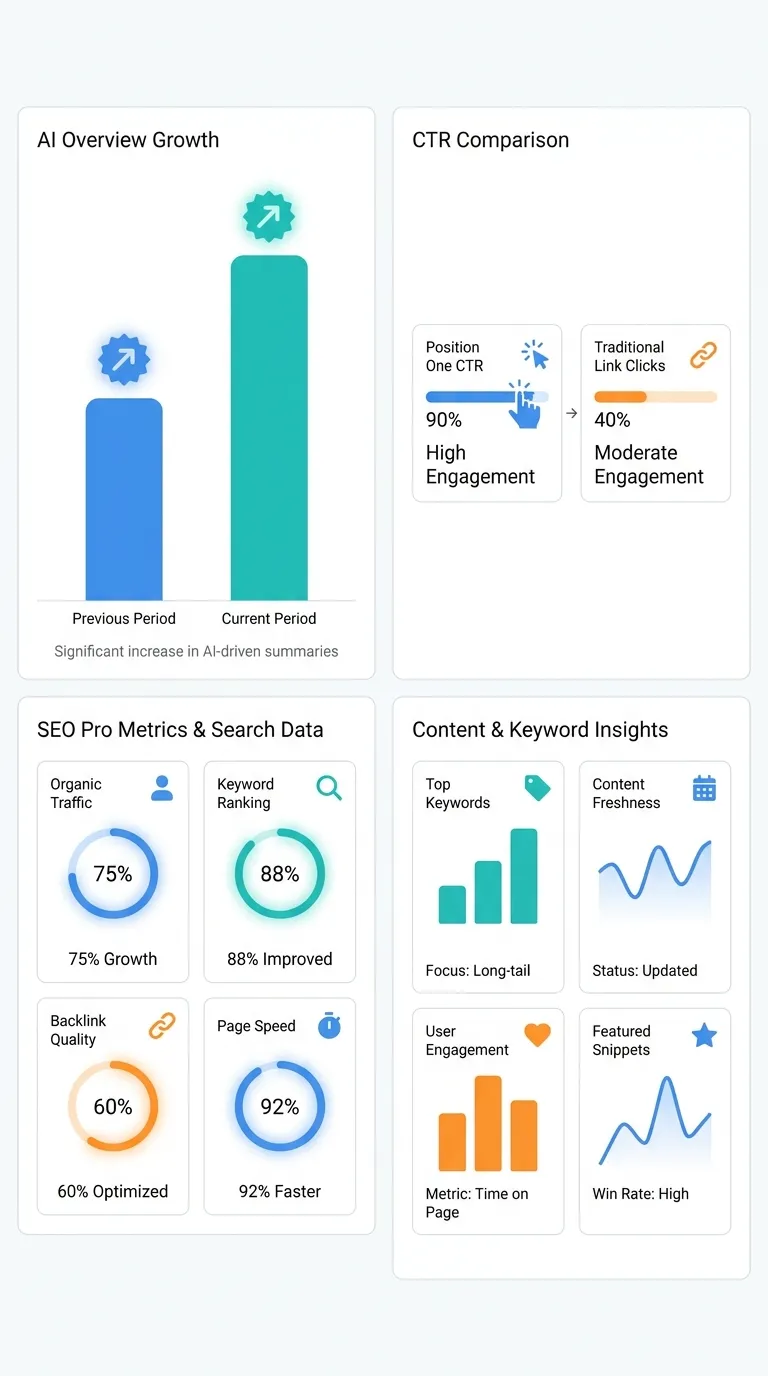
A simple formatting update can make a real difference. 99.9% of keywords triggering AI Overviews are informational (SEO Profy). That puts the most pressure on educational content, so to stay competitive, add useful information that generic AI pages don’t bring.
Common mistakes to avoid:
- Using one long intro before answering the query
- Repeating the same keyword in an unnatural way
- Publishing AI text without fact checks or examples
- Pushing the useful part of the article too far down the page
Step 4: Add schema and technical signals that support trust in AI SEO strategies
A lot of content teams skip this step, but it’s one of the most useful. Schema helps search engines and AI systems understand what your page covers, who created it, and how the pieces connect.
Neil Patel said, “Schema markup is important so AI instantly understands content representation and avoids misinterpretation.” (
) For high-value pages, start with these schema types:
- Article
- FAQPage
- HowTo
- Review
- Organization
- Person
- Breadcrumb
Then check your technical basics:
Step 4.1: Improve crawl clarity
Use internal links, breadcrumbs, and an XML sitemap.
Step 4.2: Strengthen page experience
Keep the mobile layout clean, reduce pop-ups, and improve page speed.
Step 4.3: Add author and source signals
Use named authors, short bios, and citations from trusted sources. Additionally, review schema implementation tips from Structured Data for AI Search: Schema Tactics That Help Bots Cite Your Content.
If your site needs cleanup before you grow content, look at a technical process like SEO Audit Software Innovations Transforming 2026.
Troubleshooting note: If rankings stall after you publish new AI-assisted content, check thin pages, duplicate intent, missing schema, and weak internal linking before you rewrite everything.
Step 5: Use AI for scale, but keep humans in charge of originality
AI helps with speed, but by itself it doesn’t create real differentiation, and that matters because more machine-written pages keep filling the web.
One recent study found 74% of newly created web pages in April 2025 contained AI-generated content (SQ Magazine). If your content sounds like everyone else, it’ll struggle.
Use AI in this order:
Step 5.1: Research and outline
Have AI sum up SERP patterns, related questions, and any missing subtopics.
Step 5.2: Draft sections fast
Write rough drafts for definitions, outlines, FAQs, and title ideas. Keep it fast and simple.
Step 5.3: Humanize and deepen
Add opinions, examples, client pain points, test results, and original comparisons. Add more detail.
Step 5.4: Run a final QA pass
Check facts, links, dates, claims, tone, and overlap with existing pages.
A final QA pass matters even more now because AI search traffic is growing fast. Semrush reports AI search traffic is up 527% year over year (Semrush). That’s a massive jump. One roundup also found the average visitor from AI search can be 4.4x more valuable than an organic search user (SEO Profy). That puts even more focus on quality over volume.
Tip: Save prompts, outlines, and review notes in one SOP. For agencies, a repeatable process matters most, not only creative work.
Frequently Asked Questions
What are AI SEO strategies?
AI SEO strategies are workflows that use AI tools to support keyword research, clustering, content briefs, drafting, optimization, audits, and reporting. The goal is not to replace SEO judgment. It is to speed up good work while protecting quality, trust, and SEO ranking.
Can AI-written content still rank in Google?
Yes, but only if it is helpful, accurate, original, and better than competing pages. Thin AI text with no expertise, examples, or clear structure is much more likely to fail. Human editing is still a must.
How do AI Overviews affect SEO ranking?
AI Overviews can lower clicks even when your page ranks well in organic search. That means success now includes both traditional rankings and being cited in AI-generated answers. Your content should be direct, structured, and easy to extract.
Which schema types matter most for AI SEO?
Start with Article, FAQPage, HowTo, Organization, Person, and Breadcrumb schema. These help search engines understand the page format, authorship, and site structure. If you publish reviews or product pages, add Review or Product schema too.
What tools should agencies use to build AI SEO workflows?
Most agencies need a mix of keyword research, technical audit, content optimization, schema support, and analytics tools. If you want help comparing options in a WordPress-focused setup, SEO Bot Software is a useful reference point for reviews and tutorials around AI SEO automation tools.
How can I make AI content sound more human?
Use AI for speed, then rewrite for clarity, tone, and real experience. Add examples from client work, strong opinions, mistakes to avoid, and concrete steps. You can also study workflow ideas from Automated SEO Software: Key Trends Shaping the Future in 2026 if you are building a more scalable process.
Start Ranking Higher with a Smarter AI SEO Strategies Workflow
If you want AI SEO strategies that still rank, focus on five things in order. Set better goals than rankings alone. Build topic clusters around intent, format pages so AI systems can pull from and cite them easily, and back it all up with schema plus strong technical SEO. Use AI to move faster, but keep humans in charge of originality and trust.
To check success, see whether priority pages are gaining impressions, rankings and conversions in Search Console and GA4. Watch CTR changes on informational queries. Also track how much your content appears in AI Overview-style results for the topics you actually care about. Review internal linking and schema on every key page. Then wait. Expand the cluster only after that first group of pages shows it can perform.
The best next step is simple: pick one topic cluster, update one pillar page and publish two support articles using the workflow above. A real test. That gives you something concrete instead of only theory. In modern search, strong SEO rankings come from useful content, clean structure and smart AI support working together.